
|
Share to:
Related Products
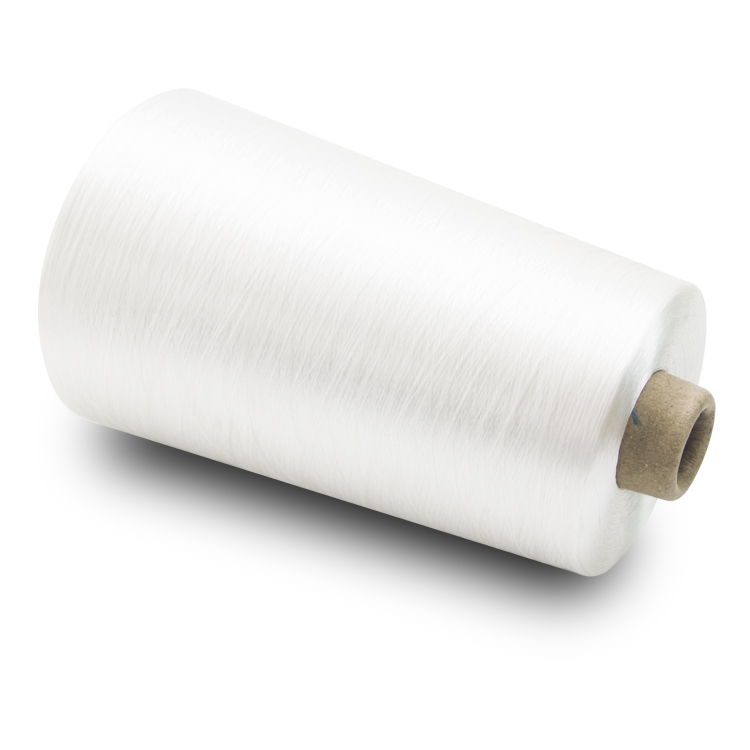

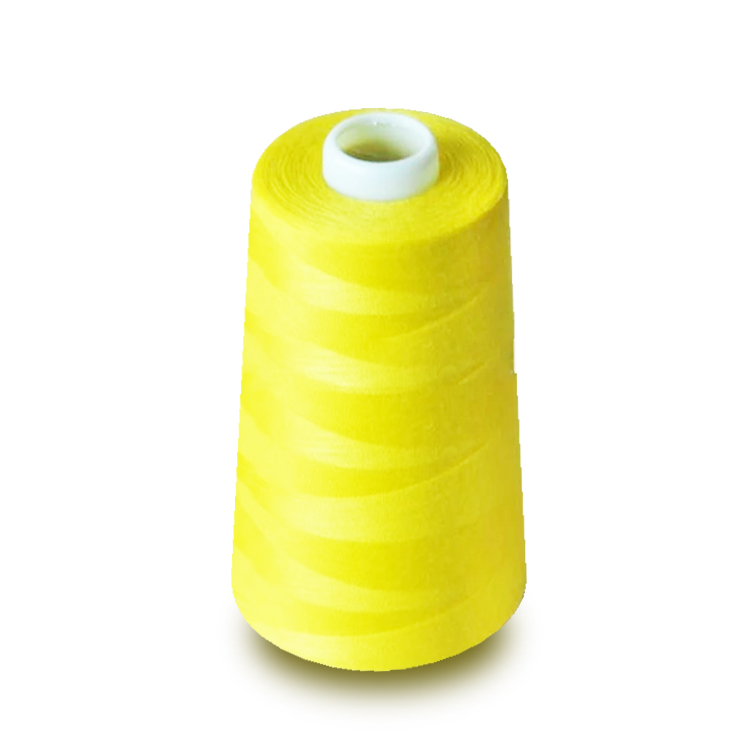
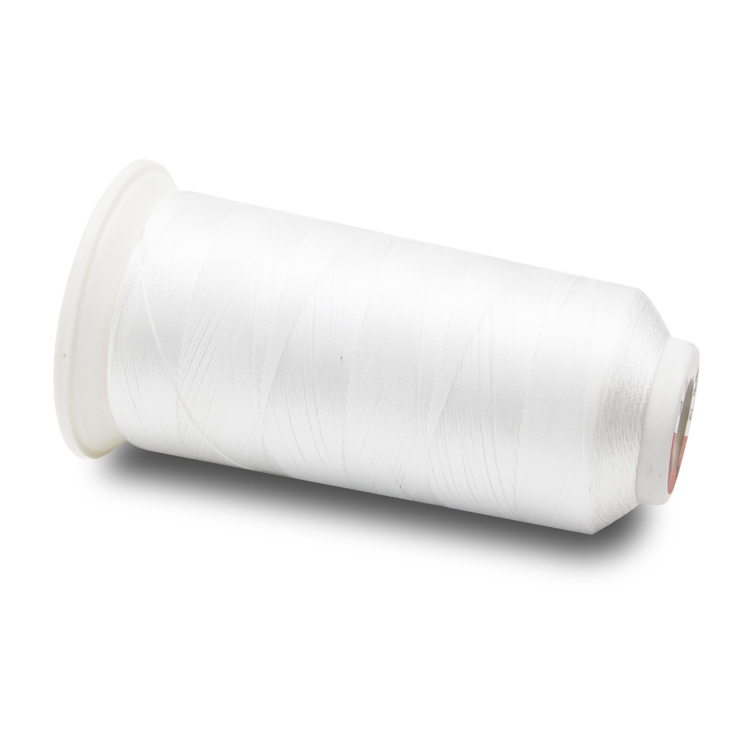

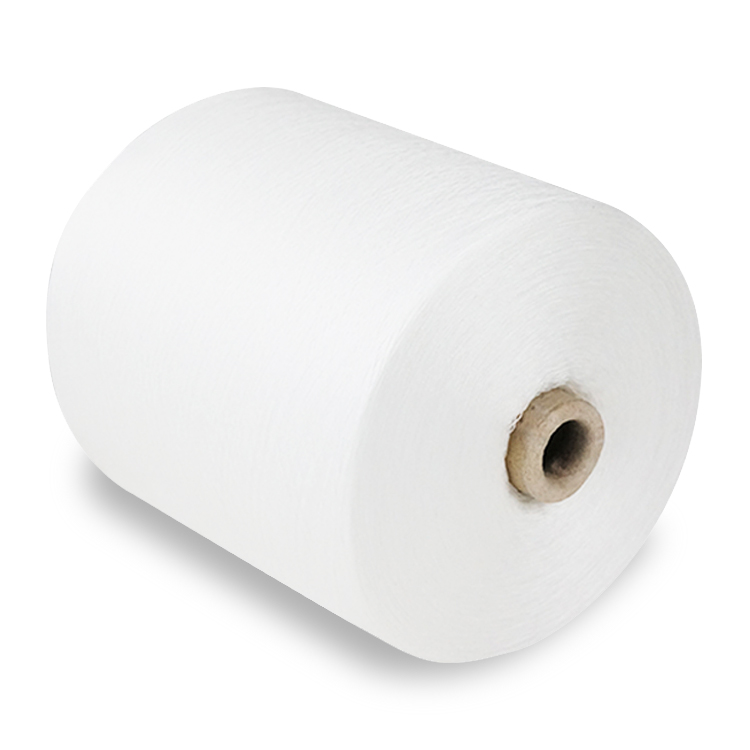
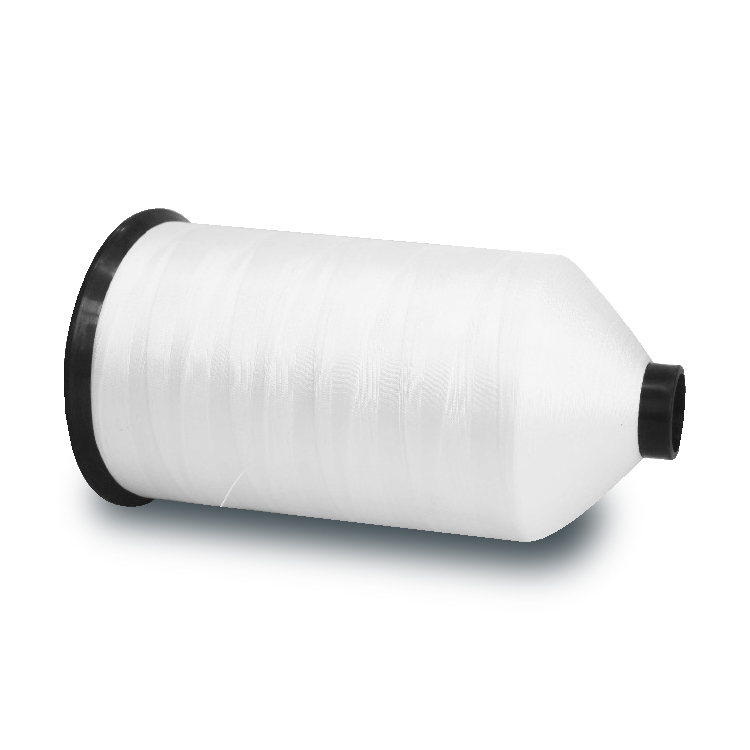
Sewing Filament Thread Spun,polyester yarn
LQ-0412
Price: From $0.66
Delivery time: 9-20 days after payment
MOQ: 500 KG
Sewing Filament Thread Spun,polyester yarn
Common treatment methods of cotton fabric in printing and dyeing process
Finishing of cotton fabric
1、 Stretching
According to the characteristics of cotton fiber plasticity in wet state, the stretching is to adjust the state of warp and weft yarn in the fabric under slow drying, and to pull the fabric door width to a certain size to achieve uniform and stable shape.
Cotton fabric is usually stretched by clip stretcher, while wool fabric, silk fabric and chemical fiber fabric are usually stretched by clip stretcher.
The front end of the stenter is often equipped with a dip mill and a drum drying device, so the stenter finishing is often combined with some additives (such as softening, whitening, etc.).
2、 Rolling finishing
The calendering and electro-optic finishing can increase the luster of the fabric, and the calendering finishing can make the fabric surface be rolled out with three-dimensional concave and convex patterns.
All of these finishing are finished by using the plasticity of cotton fiber in the hot and humid state, and by different degrees of roller rolling.
3、 Hard finishing
Stiffening finishing, commonly known as sizing finishing, is to use a certain viscosity of high molecular material (wet starch or chemical size) made of slurry to dip and roll on the fabric to form a film, so that the fabric can obtain smooth, stiff, thick and full handle, improve the strength and wear resistance of the fabric, and extend the service life.
4、 Softening
Cotton fabric can be processed by calendering, mechanical preshrinking and so on to obtain a softer hand feel, and can also be softened by adding softener.
There are many kinds of softeners, and the varieties that are not durable are paraffin emulsion, mercerized paste, chili oil, etc. the most durable varieties are reactive softeners such as softener Vs, waterproofing agent Pf, RC and reactive silicone oxygen emulsion.
The soft finishing is usually carried out by means of hot-air stretching and hot-air heat treatment.
5、 Whitening
The fluorescent whitening agent can absorb the invisible ultraviolet light in the sunlight, change into bright blue violet visible light and radiate it, and mix with the original yellow light on the fabric to form white light, thus greatly improving the whiteness of the fabric. Fluorescent brightener has affinity for fiber and can dye like dye, so it can be bleached by dip dyeing or hot air stretching drying after dip rolling.
There are several kinds of fluorescent whitening agents commonly used in cotton cloth, such as VBL, Vbu, etc.; in silk fiber, such as BSL, WS, WG, etc., VBL can also be used; in polyester fiber, the whitening agent DT is commonly used.
6、 Preshrunk and crease resistant finishing
After dyeing and finishing, when the dry fabric is wet again under the state of relaxation, it will have obvious shrinkage in the warp and weft direction, which is called shrinkage. Mechanical preshrinking and chemical finishing are often used to solve the problem of high shrinkage in dyeing and finishing.
A. Mechanical preshrinking
Mechanical preshrunk finishing can be carried out with a variety of equipment, such as the over speed feeding clip stenter, blanket or blanket preshrunk finishing machine, etc. In the process of stretching, the warp direction of the fabric is in the state of no tension, which can cause free retraction, increase the warp direction of the fabric, and improve the shrinkage. In the preshrinking process of blanket or blanket, the shrinkage effect of relaxation after stretching is used to make the warp direction of the corresponding fabric shrink synchronously, so as to eliminate the potential shrinkage.
B. Chemical anti shrinking and anti wrinkle finishing
Some fibers, such as viscose, have low degree of polymerization, are easier to swell and extend than cotton fibers. The size of the fabric is not stable, not only has high shrinkage, but also is easy to wrinkle. For this kind of fabric, if mechanical preshrinking is used, the antishrinking effect is not good, so chemical finishing must be used. In production, chemical finishing is rarely used solely for the purpose of anti shrinkage, but often combined with anti wrinkle, because at the same time of Anti Wrinkle finishing, the fabric also obtains the effect of anti shrinkage, the two are inseparable.
At present, the commonly used anti wrinkle and anti shrinkage finishing method is a chemical finishing process which uses the compound with cross-linking polymerization ability to treat the fabric, make it cross-linked with the fiber and polymerize and deposit in the fiber. Commonly known as resin finishing.
There are many kinds of resins used in crease resistant finishing, such as UF, TDM, 2D and so on. Although these resins have good finishing effect, their application is limited because they are mostly aldehyde containing compounds, which will release free formaldehyde harmful to human body and environment. In recent years, more and more low formaldehyde and formaldehyde free varieties have been developed, such as polycarboxylic acid (BTCA), glyoxal derivatives, tetraoxane, epoxy compounds and thermoplastic resins.
The basic methods of resin finishing are as follows:
The finishing solution containing resin monomer or initial shrinkage body is dipped and then dry heat treatment is carried out.
On the basis of the above finishing technology, the durable press finishing technology which can improve the wrinkle resistance of the fabric in the wetting state and has higher requirements is developed.