
|
Share to:
Related Products
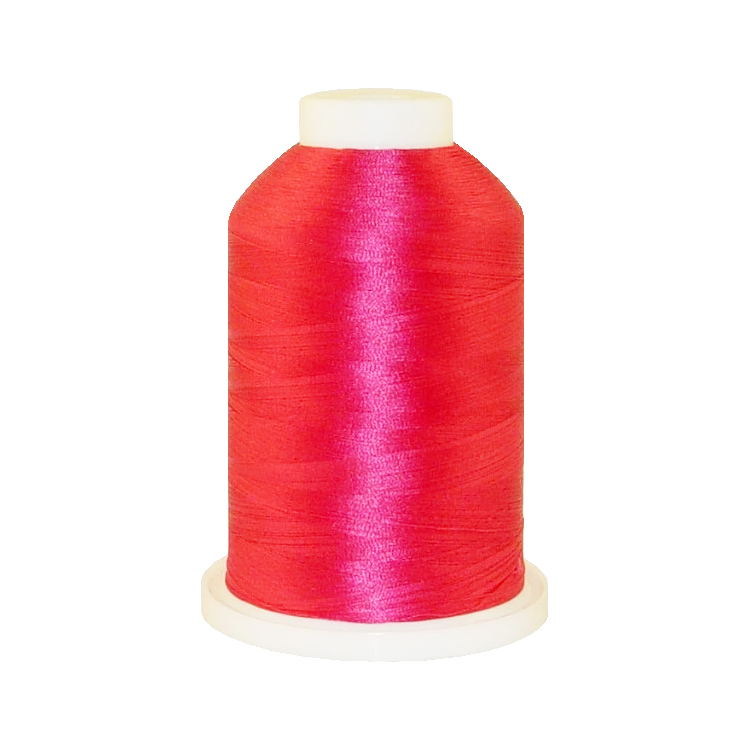


Dyed Polyester Dty/fdy/poy Yarn
LQ-0412
Price: From $0.66
Delivery time: 9-20 days after payment
MOQ: 500KG
Dyed Polyester Dty/fdy/poy Yarn
Factors affecting the fastness to sunlight of dyes and improvement methods
Reading guide
Light fastness refers to the ability of a dye to maintain its original color under sunlight. According to the general regulations, the determination of fastness to sunlight is based on the sunlight. In the laboratory, in order to facilitate the control, artificial light source is generally used and corrected when necessary. The most commonly used artificial light source is hernia light, and carbon arc lamp is also used. Under the irradiation of light, the dye absorbs the light energy, the energy level is increased, and the molecules are in an intensified state. The Chromogenic System of the dye molecules changes or is destroyed, resulting in the decomposition of the dye and discoloration or fading.
1. Effect of light on dye production
When a dye molecule absorbs the energy of a photon, it will cause the outer valence electron of the molecule to transition from the ground state to the excited state.
According to the structure, the dye molecules can undergo different excitation processes under the action of different wavelengths of light waves, including π→π *, n → π *, CT (charge transfer), s → s (single line state), s → t (trilinear state), ground state → first excited state and ground state → second excited state. The ground state of the singlet is written as S0, and the first and second excited singlet are written as S1 and S2 respectively. The corresponding trilinear states are represented by T0, T1 and T2.
In the process of excitation, dye molecules are excited into various electronic excited states of vibrational energy levels. Their vibrational energy levels will be rapidly reduced, and the energy will be converted into heat and dissipated. This process of energy level reduction is called vibration passivation. In the process of vibration passivation, S2 excited state with low vibration level will also be transformed into S1 excited state with higher vibration level, and vibration passivation will continue. In this way, the excited state S2 with higher energy level is transformed into S1 excited state with the lowest vibrational level. Under the condition of equal energy intersection, the transition between S2 and S1 electronic states does not include the change of electron spin multiplicity, which is called internal transformation. There is also a transition between singlet and triplet states, from S1 to T1 excited state. The transition of electronic energy states with the multiplicity of electron spins under the condition of equal energy intersection is called inter system channeling. Due to the "forbidden" of electron spin selection, the rate of inter system channeling is generally relatively low.
The photochemical reaction between the sensitized dye molecules and other molecules leads to the light fading of dyes and the light brittleness of fibers.
2、 Factors affecting light fastness of dyes
1. The wavelength of light source and irradiating light;
2. Environmental factors;
3. The chemical properties and structure of the fiber;
4. The bond strength between dye and fiber;
5. Chemical structure of dyes;
6. Dye concentration and aggregation state;
7. The effect of artificial sweat on the color fading of dyes;
8. The effect of additives.
The light fastness of the dyed fabric will also be affected by the incomplete soaping after dyeing, and the light fastness of the dyed fabric will be affected by the residue of the unfixed and hydrolyzed dyes on the fabric surface, and their light fastness is obviously lower than that of the fixed reactive dyes. The more thorough soaping, the better the light fastness.
The application of cationic low molecular weight or polyamine condensed resin type fixing agent and cationic softener in fabric finishing will significantly reduce the light fastness of the dyed fabric. Therefore, attention must be paid to the effect of fixing agents and softeners on the fastness to sunlight.
3、 Methods for improving the fastness to sunlight of dyes
1. The structure of dyestuff was improved to reduce the influence on the dye color system while consuming light energy, so as to keep the original color, that is, the dyes with high light fastness. The price of this kind of dyes is generally higher than that of ordinary dyes. For fabrics with high sun exposure requirements, the selection of dyes should be started first.
2. If the fabric has been dyed, but the sun fastness can not meet the requirements, it can also be improved by auxiliaries. In the process of dyeing or after dyeing, appropriate auxiliaries are added to make them react before dyes when exposed to light, which consumes light energy, so as to protect dye molecules. Generally divided into UV absorber and anti UV agent, collectively referred to as the sun fastness improver.
Our polyester yarn also has this fixation problem, generally speaking, it is relatively easy to handle.